Case study · enterprise-transform
Browser VR Training
Browser-based VR training cut training time 55% - no installs, vestibular-safe.
 Browser VR Training case study
Overview
The brief.
A manufacturer replaced costly in-person safety training with browser-based WebXR training, cutting training time 55% with no installs and vestibular-safe motion.
Client
Manufacturing company
Manufacturing / Enterprise
multiple plants
Gallery
In the wild.
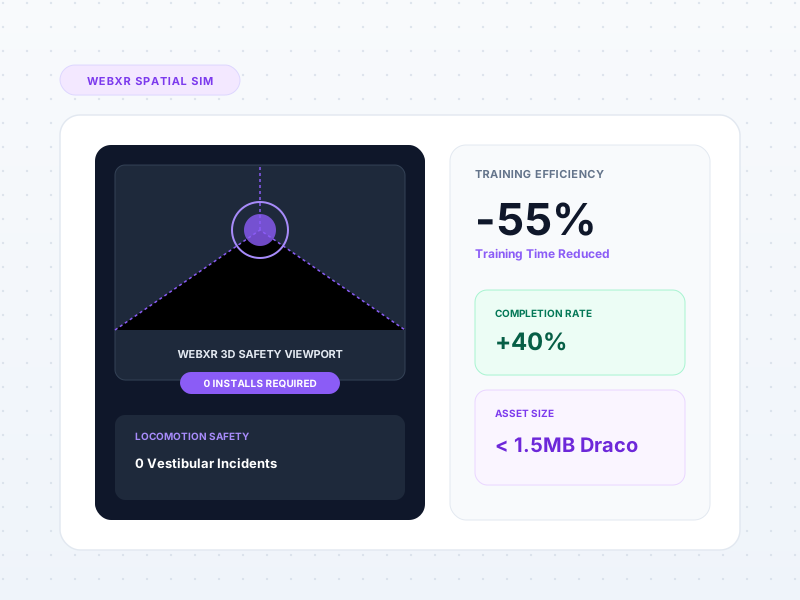
The numbers.
Results
-55%
training time
0
installs required
+40%
training completion
0
vestibular incidents
The challenge
What was in the way.
In-person training costs
Safety training pulled operators off the line and burned travel budget. Sessions were infrequent, so compliance and skill gaps lingered.
Heavy native app friction
Prior attempts meant 400MB installs on plant hardware. Field techs never installed them - so the training never reached the people who needed it.
The solution
How we solved it.
We built a browser-first WebXR experience with desktop fallback, kept scenes under 1.5MB with Draco + KTX2, used teleport/snap-turn locomotion for vestibular safety, and added spatial analytics to see where trainees struggled.
“Training time dropped by more than half, and because it runs in the browser, everyone actually does it. No installs changed everything.”
Outcome
The bottom line.
Browser-based VR training cut training time 55% - no installs, vestibular-safe.
FAQ
About this engagement.
Is a headset required?
No - it runs in the browser; XR is progressive enhancement with a desktop fallback.
How do you avoid motion sickness?
Vestibular-safe locomotion: teleport or snap turns, no smooth zoom - zero incidents in testing.
What analytics do we get?
Spatial heatmaps and task completion so you see where trainees struggle.
Want results like these?
We build to the outcome, then let the numbers speak.